Dual-band observation
Visible-light and infrared imaging, day and night.
Visible + infrared
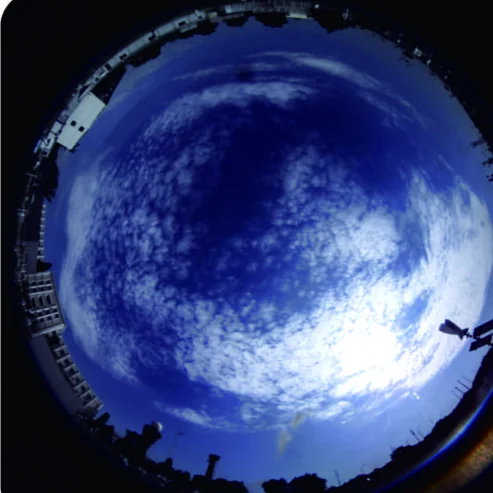
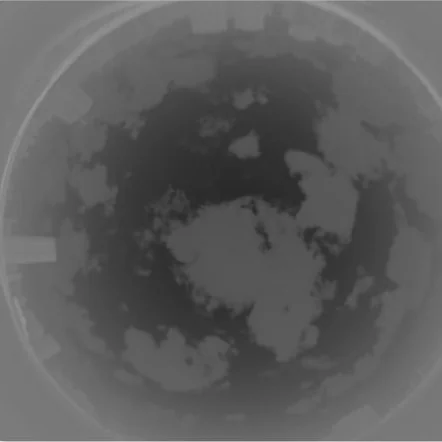
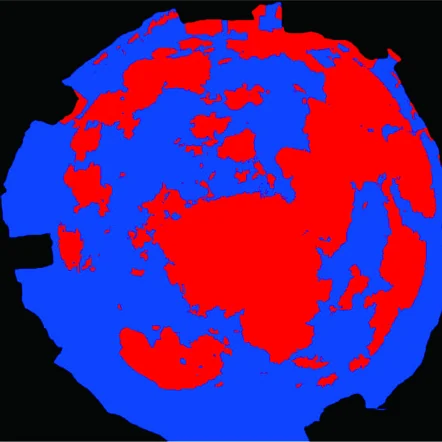
ASC200 combines visible-light and 8–14 μm infrared observations to provide visible, infrared and combined cloud cover, day and night, for meteorology, solar energy and research.
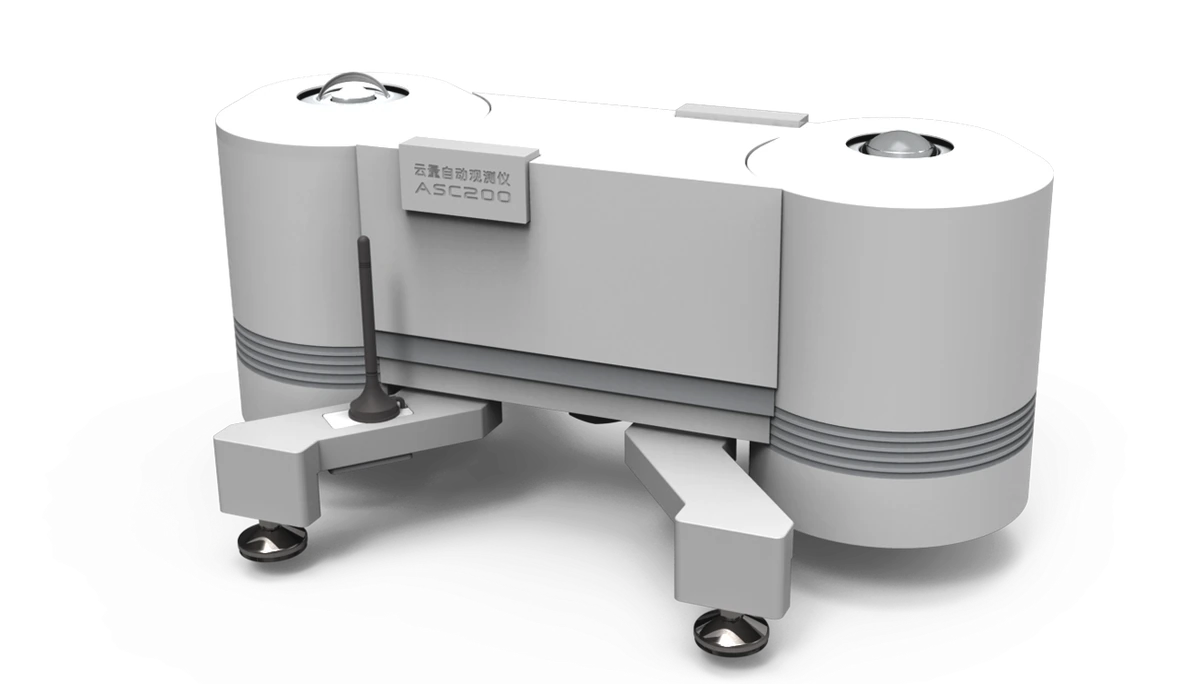
The ASC200 Cloud Cover Observation Instrument, also known as an all-sky imager, is developed, manufactured and sold by Anhui Yunnengtian Intelligent Technology Co., Ltd. It combines visible-light and 8–14 μm infrared imaging to provide visible, infrared and combined cloud cover, day and night. It has a 180° visible-light field of view and 160° infrared field of view, samples every 5 or 10 minutes and stores data locally for 30 days. Applications include meteorology, solar energy and research.
Model ASC200 · Updated 2026-11-08
Visible-light and infrared imaging, day and night.
Reduce sun halo and overexposure effects.
An embedded shutter-type sun shield protects the sensor.
Built-in image processing, without an external workstation.
Water, dust and condensation protection.
Applications reported in the datasheet include the China Meteorological Administration, the China Radiometric Calibration Sites (Dunhuang and Qinghai Lake), Shouxian National Climate Observatory, and meteorological bureaus in Beijing and other locations. The instrument has also participated in a national key research and development project on integrated vertical meteorological observation in megacities.

| Item | Specification |
|---|---|
| Observation outputs | Visible-light, infrared and combined cloud cover; cloud type, cloud base height estimation |
| Infrared wavelength | 8–14 μm |
| Field of view | Visible-light 180°; infrared 160° |
| Image resolution | Visible-light ≥ 2592 × 1944; infrared ≥ 640 × 512 |
| Sampling interval | 5 or 10 minutes |
| Data storage | 30 days |
| Software | Web-based device management; TCP/IP communication and FTP/SFTP file transfer |
| Ingress protection | IP65 |
| Operating temperature | −45 to 55 °C |
| Communication interfaces | Ethernet and serial ports |
| Dimensions and weight | 30 × 30 × 40 cm; 30 kg |
| Power supply | AC 220 V / 50 Hz |
Source: official ASC200 datasheet.
Anhui Yunnengtian Intelligent Technology Co., Ltd. commissioned the following tests on ASC200 automatic cloud cover observer samples. The environmental tests include salt fog, damp heat and rain, so ASC200 is suitable for long-term outdoor operation at coastal and offshore sites.
| Test | Standard | Result | Laboratory | Report No. / date |
|---|---|---|---|---|
| Environmental: low temperature, high temperature, damp heat, vibration, shock, salt fog, rain, sand and dust | GJB 150A-2009, Parts 3, 4, 8, 9, 11, 12, 16 and 18 | All 8 tests met the standard; after operating at −50 °C for 72 h and at 55 °C for 48 h, the sample worked normally | Beijing TIRT Testing Technology Service Co., Ltd. (CMA, CNAS) | OTA9-202404908 / 2024-12-24 |
| EMC: CE102, CS101, CS114, CS115, CS116, RE102, RS103 | GJB 151B-2013 | All 7 tests passed | Hefei Heshi Testing Co., Ltd. (CMA, CNAS) | HFHS20241122-01 / 2024-11-27 |
| Mould growth | GJB 150.10A-2009 | Mould growth grade 1 | Hefei Heshi Testing Co., Ltd. (CNAS-accredited laboratory) | HFHS20241206-03 / 2025-01-10 |
| EMC immunity: electrostatic discharge, radiated RF field, electrical fast transient, surge, conducted RF disturbance | GB/T 17626.2, .3, .4, .5 and .6 | Met test level 2, criterion A | Anhui Institute of Metrology (CNAS-accredited laboratory) | (2023) Wan Jian XN No. 0138 / 2023-09-01 |
Results apply only to the samples tested. Product specifications are those in the table above.
Automatic lens washing device (optional): an all-sky imager runs outdoors unattended for long periods, and dust, sand, bird droppings and salt-fog crystals build up on the lens dome, partly blocking the sky image and causing cloud-cover errors. ASC200 can be fitted with an external spray-type lens washing device: it sprays water over the dome at a set interval and can also be started remotely from the device management software. It reduces manual wiping on site and suits remote stations, offshore platforms, solar PV plants and other sites where maintenance visits are difficult.
| Output / interface | Observation source | Description |
|---|---|---|
| Visible-light cloud cover | Visible observations | Cloud cover analysis from daytime sky images. |
| Infrared cloud cover | 8–14 μm infrared | Supports nighttime cloud cover observations. |
| Combined cloud cover | Dual-band observation | Provides combined cloud cover results. |
| Network and serial | — | Web device management, TCP/IP communication and FTP/SFTP file transfer. |
Field definitions and order vary by transmission mode. Confirm the mode and software version against the relevant interface documentation before integration.
| Comparison | ASC170 All-Sky Imager | ASC200 Cloud Cover Observation Instrument | ASC300 All-Sky Imager |
|---|---|---|---|
| Observation band | Visible light | Visible light + 8–14 μm infrared | Visible light + 8–14 μm infrared |
| Night observation | Not supported | Supported (infrared) | Supported (infrared) |
| Cloud cover outputs | Total, thin and thick cloud cover | Visible, infrared and combined cloud cover | Visible and infrared cloud cover; thin, thick and low cloud cover as project options |
| Interfaces and software | Ethernet, RS485; CSV, FTP uploads; web management | Ethernet, serial; TCP/IP, FTP/SFTP; web device management | Ethernet, serial; sky images and CSV via FTP |
| Ingress protection | IP66 | IP65 | IP65 |
| Power supply | DC12V or DC5V | AC220V / 50Hz | AC220V / 50Hz |
Applications, five key features and 12 technical parameters of the ASC200 Cloud Cover Observation Instrument.
Document version V1.0 · Updated 2026-11-08
1 page · PDF in English · 0.55 MB
Acta Optica Sinica, 2023, 43(6), 0612001. Results apply to the configuration and test conditions reported in the paper.
Read research summary →Instructions for device login, parameter settings, image masks and alignment, routine maintenance and troubleshooting.
Applicable software version v2.35.0 · Updated 2026-10-28
17 pages · PDF in Chinese · 3.53 MB
Guidance on live observations, image viewing, historical playback, daily data lists and server settings, including the HDR and ADD image naming conventions.
Applicable software version v2.35.0 · Updated 2026-10-28
22 pages · PDF in Chinese · 1.44 MB
Yes. ASC200 combines visible light and 8–14 μm infrared observation. Infrared enables nighttime measurements and continuous day-and-night observation.
ASC200 provides visible-light, infrared and combined cloud cover. The sampling interval is 5 or 10 minutes, with local data storage of 30 days.
No. Built-in image processing hardware performs device-side processing without an external computer or workstation.
The device provides Ethernet and serial interfaces, with web-based device management, TCP/IP communication and FTP/SFTP file transfer. Confirm the data fields and interface configuration against the documentation for the delivered version.
Published specifications are IP65 protection, an operating temperature of −45 to 55 °C and AC 220 V / 50 Hz power. Confirm power, network access, sky visibility and maintenance conditions before installation.
Yes. A 2023 paper in Acta Optica Sinica, Development and Data Analysis of a Dual-Band All-Sky Cloud Cover Observation System, describes ASC200. The reported results apply to the configuration and test conditions in that study.
All-sky imagers with an infrared channel make multi-layer clouds easier to distinguish. The paper 全天空红外云探测在航空气象中的应用 (All-sky infrared cloud detection in aviation meteorology; Journal of Atmospheric and Environmental Optics, 2021, 16(5)) used observations from the ASC200 Cloud Cover Observation Instrument; in its two-layer cloud case, the layers were more distinct in the infrared image. The number of layers identified automatically and the outputs depend on the project configuration.
ASC200 and ASC300 have an 8–14 μm infrared channel that captures thermal infrared images of the sky and clouds and supports day-and-night cloud detection. ASC300 can output cloud temperature as a project option. Here, cloud temperature means the cloud brightness temperature retrieved from infrared images, not the instrument’s internal temperature.
PRODUCT & TECHNICAL ENQUIRIES
Include your name, organization, contact details, observation goals, installation location and required interfaces.