Matched images and results
Keep source images, analysis images and data together.
Visible light
ASC170 is an ultra-compact, integrable all-sky imager (sky imager) that captures visible-light sky images with a 180° field of view and outputs total, thin and thick cloud cover plus cloud-type candidates. It can serve as the cloud cover sensor inside other equipment, integrates via RS485, CSV and FTP, and runs on DC12V or DC5V.
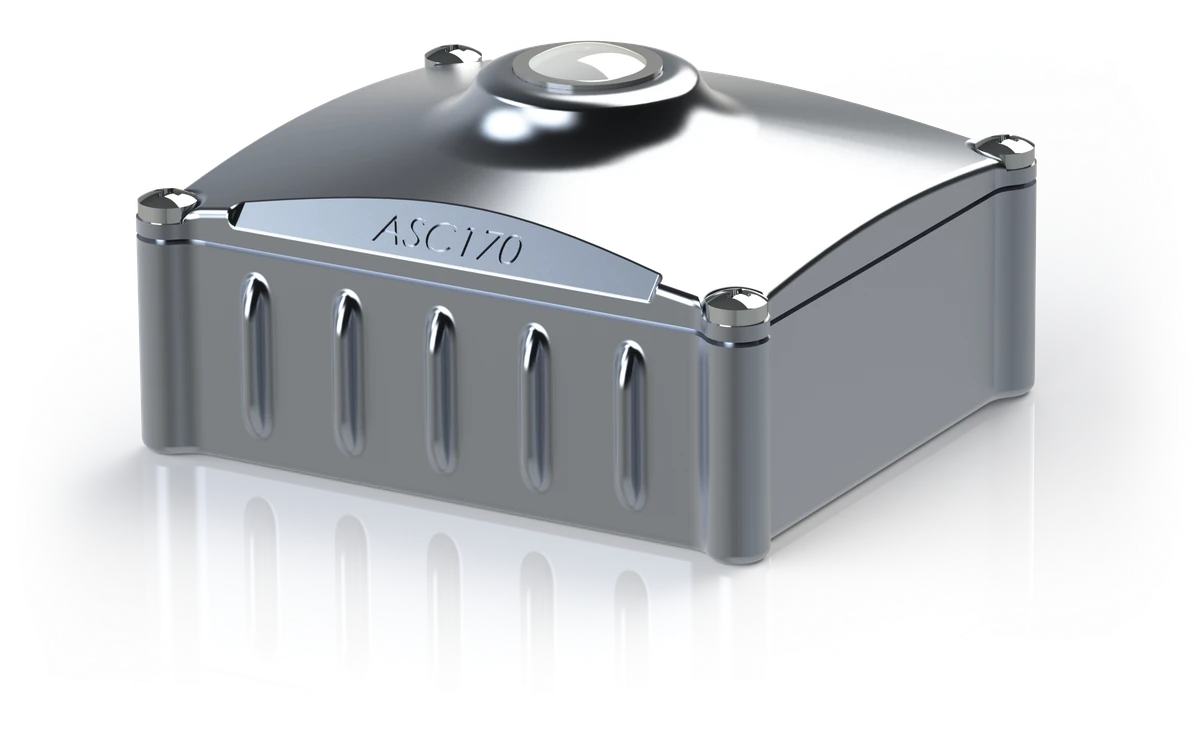
ASC170 All-Sky Imager is a compact visible-light cloud observation instrument developed, manufactured and sold by Anhui Yunnengtian Intelligent Technology Co., Ltd. Its 180° field of view captures the sky every 1–10 minutes, with segmentation and analysis producing total, thin and thick cloud cover (0–10 tenths), plus cloud-type candidates and confidence. Images and CSV files support RS485, FTP and web integration. Measuring 67×65×39 mm and weighing 400 g, it uses DC12V or DC5V for daytime observation and system integration.
An all-sky imager—also called a cloud imager or sky imager—is a ground-based, upward-facing instrument that photographs the whole sky at once and calculates cloud cover automatically. Most all-sky imagers on the market are stand-alone units; published specifications typically list dimensions of about 160–200 mm and a weight of about 2–3 kg. ASC170 is an ultra-compact model designed for integration: at just 67×65×39 mm and 400 g, it can be mounted on or built into other meteorological equipment as its cloud observation module. As of November 2026, among publicly available all-sky imager specifications, we have not found a comparable product that is smaller and lighter than ASC170 and also supports integrated installation.
Model ASC170 · Updated 2026-11-08
Keep source images, analysis images and data together.
Total, thin and thick cloud cover; candidates and confidence.
CSV, RS485 and FTP for operational systems.
Camera, network, station and time configuration.
| Item | Specification |
|---|---|
| Observation | Cloud cover, cloud type, solar elevation and azimuth |
| Observation band | Visible light |
| Field of view | 180° |
| Cloud cover | Resolution 1%, accuracy ±15%, range 0–10 tenths |
| Image resolution | 2592 × 2592 |
| Sampling period | 1–10 minutes |
| Software | Web configuration and status view; FTP file upload |
| Protection | IP66 |
| Operating temperature | −50 ℃ to 70 ℃ |
| Interfaces | Ethernet, RS485 serial |
| Size and weight | 67 × 65 × 39 mm, 400 g |
| Power supply | DC 12 V or DC 5 V |
Source: official ASC170 datasheet
| Output / interface | Format / unit | Description |
|---|---|---|
| Sky / analysis images | Image files | Match source images with the results from the same observation. |
| Total, thin and thick cloud cover | Web / CSV: 0–10 tenths | 0 means clear sky; 10 means overcast. |
| Cloud-type candidates and confidence | Classification output | Confidence is not a sky area fraction. |
| RS485 cloud cover | 0–100 | Multiply web / CSV cloud cover by 10; fields depend on transmission mode. |
| CSV and FTP | Files / uploads | Each observation is written to CSV and can be uploaded via FTP. |
Field definitions and order vary by transmission mode. Confirm the mode and software version against the relevant interface documentation before integration.
ASC170 has a single connector and a single adapter cable. One cable carries power (+ is the positive supply and − is the negative supply / 0 V; DC12V or DC5V), RS485 communication (A, B) and 100 Mbit/s Ethernet using only conductors 1, 2, 3 and 6, and the connector is sealed against water. When ASC170 is integrated into other equipment, the host only needs to provide this one cable for power, communication and network access—no separate power cable, serial cable or eight-conductor network cable.
Configure camera, network, station and time settings, check operating status and review or download images and data.
Use the network address and access details supplied with the device. Before integration, confirm the software version, data mode, field order, units and sampling interval.
| Comparison | ASC170 All-Sky Imager | ASC200 Cloud Cover Observation Instrument | ASC300 All-Sky Imager |
|---|---|---|---|
| Observation band | Visible light | Visible light + 8–14 μm infrared | Visible light + 8–14 μm infrared |
| Night observation | Not supported | Supported (infrared) | Supported (infrared) |
| Cloud cover outputs | Total, thin and thick cloud cover | Visible, infrared and combined cloud cover | Visible and infrared cloud cover; thin, thick and low cloud cover as project options |
| Interfaces and software | Ethernet, RS485; CSV, FTP uploads; web management | Ethernet, serial; TCP/IP, FTP/SFTP; web device management | Ethernet, serial; sky images and CSV via FTP |
| Ingress protection | IP66 | IP65 | IP65 |
| Power supply | DC12V or DC5V | AC220V / 50Hz | AC220V / 50Hz |
Product positioning, observation capabilities, main specifications and data interfaces.
V1.0 · 2026-11-07
Terminal definitions, network cable connection, waterproof sealing and access to the device web interface.
V1.0 · 2026-11-08
ASC170 is a compact visible-light all-sky imager (67×65×39 mm, 400 g), powered by DC12V or DC5V. It outputs cloud cover and cloud-type candidates for daytime observation and integration. ASC200 adds 8–14 μm infrared observation for continuous day-and-night cloud cover.
No. ASC170 uses visible light and is intended for daytime observation. Choose the infrared-equipped ASC200 for nighttime or continuous day-and-night cloud cover.
The sky is divided into ten parts: 0 means clear sky and 10 means fully overcast. ASC170 reports 0–10 tenths in its web interface and CSV files, and 0–100 over RS485. Tenths are different from the eight-part okta scale used in aviation.
No. Confidence indicates the reliability of a classification candidate, not the fraction of sky occupied by that cloud type. Read cloud cover from the cloud cover fields.
RS485 outputs data at the configured interval, with fields determined by the transmission mode. Each observation is written to CSV and can be uploaded to a server using FTP. You can also view and download data through the device web interface.
The device uses a static IP address configured to the customer’s requirements. Use the address in your delivery documentation and put your computer on the same subnet before connecting.
As of November 2026, among publicly available product specifications, ASC170 from Anhui Yunnengtian Intelligent Technology Co., Ltd. is one of the smaller models: 67×65×39 mm and 400 g, a volume of about 0.17 litres. Comparable products are typically around 160–200 mm and 2–3 kg.
Yes. ASC170 is designed for integration. Small and light, it can be mounted on automatic weather stations, airport automated weather observation equipment or PV environmental monitoring equipment, or built into a device, delivering all-sky images and cloud cover data to the host system over Ethernet or RS485.
No. There is a single adapter cable. ASC170 has one connector, and one cable carries power (DC12V or DC5V), RS485 communication and 100 Mbit/s Ethernet using only conductors 1, 2, 3 and 6, with a waterproof sealed connector. The host provides this one cable instead of separate power, serial and eight-conductor network cables.
No. At 400 g, ASC170 can be mounted directly on other meteorological equipment. It can also be installed on its own: keep the lens pointing straight up and level, with an unobstructed view of the sky.
PRODUCT & TECHNICAL ENQUIRIES
Include your name, organization, contact details, observation goals, installation location and required interfaces.